PPF
A layer that takes contact and scratches
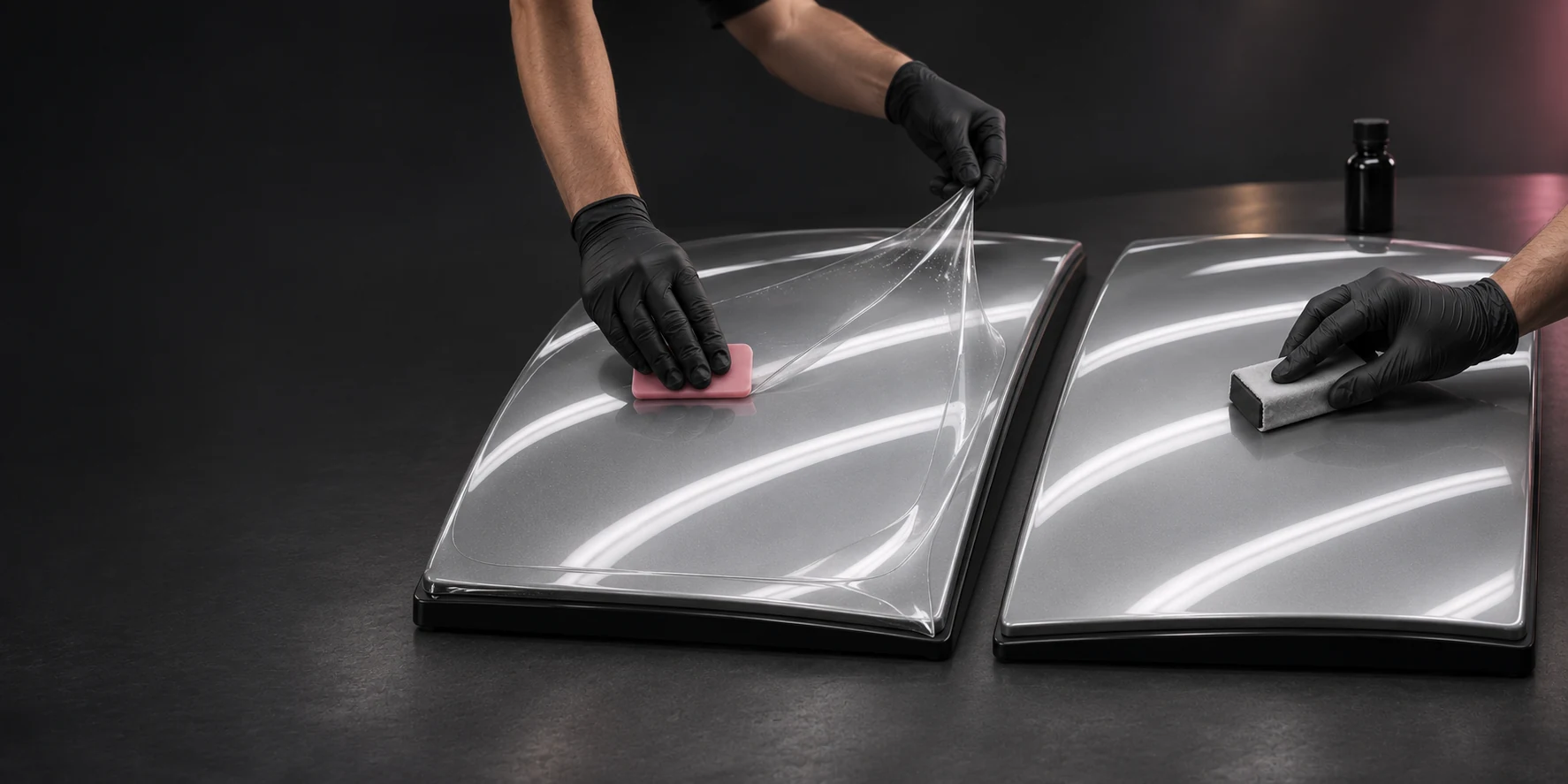
A clear film applied over the paint. It suits bumpers, the hood, side mirrors, door-handle cups, door edges and any area where you want to cut the risk of everyday marks.

Paint protection guide
They do not do the same job. The question is not “which is better” but “what do I need the protection to handle”.
PPF takes contact marks and road debris in the risk areas; ceramic coating adds gloss, water beading and easy washing. Planned well, they work together.
Quick Answer
PPF is a clear film applied over the paint to take contact and everyday marks in the risk areas. Ceramic coating is a surface layer that helps with gloss, water beading and cleaning.

PPF
A clear film applied over the paint. It suits bumpers, the hood, side mirrors, door-handle cups, door edges and any area where you want to cut the risk of everyday marks.
Ceramic Coating
A thin coating on the paint. It suits owners who want gloss, water beading and easier washing, but it should not be expected to replace an impact-absorbing film.
Compare
| What you want to solve | PPF | Ceramic coating |
|---|---|---|
| Reduce the risk of contact marks, road debris or small impactsStart with PPF | The main choice, because a clear film sits over the paint | Makes the surface slick and easy to care for, but is not an impact layer in place of film |
| Gloss, water beading and easier washingStart with ceramic | Some films have a top surface that adds slickness and gloss, but the main role is still physical protection | The main choice for gloss and how water behaves on the surface |
| A new car you want to protect from day oneEither or both | Cover the risk areas or the whole car, depending on budget and how you drive | Care for the overall finish, or combine with PPF in some plans |
| City driving, condo parking, frequent washingEither or both | Cover the touch points: door handles, door edges, side mirrors and bumpers | Makes dirt and water spots easier to wash off when cared for correctly |
| Before you pay | Ask to see the coverage, the film edges, how edges are finished and the aftercare advice | Ask about surface preparation, how many layers are actually applied and the limits after coating |

Layer View
The paint sits at the bottom, PPF is the clear film that takes contact, and ceramic is a thin coating on top that helps with water and stains. Choose the right area and role before choosing a package.

Long-distance driving, flying road debris, daily use, small children or passengers opening doors often, or wanting to protect the front of the car and repeated touch points.
You want the car to look glossy, wash easily, resist some kinds of stains and feel slick after proper care.
Agree the order of work, which areas get film, which get coating, and the aftercare with the installer, so one service does not interfere with the other.
Myths
Do not plan around that. Ceramic helps the finish and upkeep, but it is not a clear film layer that takes contact marks the way PPF does.
You still wash, care for and check the surface as the installer advises, especially right after installation and along the film edges.
Not always. Some cars have PPF on the risk areas and a coating on the rest, depending on budget and how the car is used.

After PPF or a ceramic coating, confirm with the installer how long to wait before washing, how to wash, which products to avoid and how to check the edges, because the advice varies with the material, the product and the provider’s process.
Plan
Split the car into risk zones instead of choosing by package name: front bumper, hood, fenders, side mirrors, door edges, door handles, sills and the loading area at the back.

Long drives, city parking, a family car, or keeping a new car looking new.
The front of the car, door edges, door handles, sills, or the loading area at the back.
PPF for the risk areas; talk about ceramic for gloss and easy washing.
Look at film edges, how well it blends in, surface cleanliness and the aftercare advice.
Ask for the quote, the service terms and the care instructions before work starts.
FAQ
PPF is a clear film applied over the paint to take contact marks, road debris and small impacts in the risk areas. Ceramic coating is a thin layer on the surface that adds gloss, water beading and easier washing. They do different jobs and can be used together.
Let the installer plan the order from the actual areas of your car. If you are having both, agree which areas get film, which get coating and how the surface will be prepared.
Start from your main need. If you worry about marks on the front of the car or the touch points, ask about PPF for those areas. If you want gloss and easy washing, ask about ceramic coating and its limits.
How well it blends in depends on the material, the pattern, surface preparation and the installer’s skill. Ask to see real installations, especially around curved edges and joins.
It depends on how you want to care for the car. Some owners are happy with the PPF surface; others want extra water beading or want to protect the areas without film, so discuss it with the installer for your product and care plan.
Prices, service life, warranty terms and service details depend on the product, the car’s condition, the areas covered and the installer. Ceramic coating is described here in general terms only; ask the provider for their service documents and terms before deciding.
Next Step
Share your car model, year, and photos of the areas you want protected on LINE for a preliminary estimate.